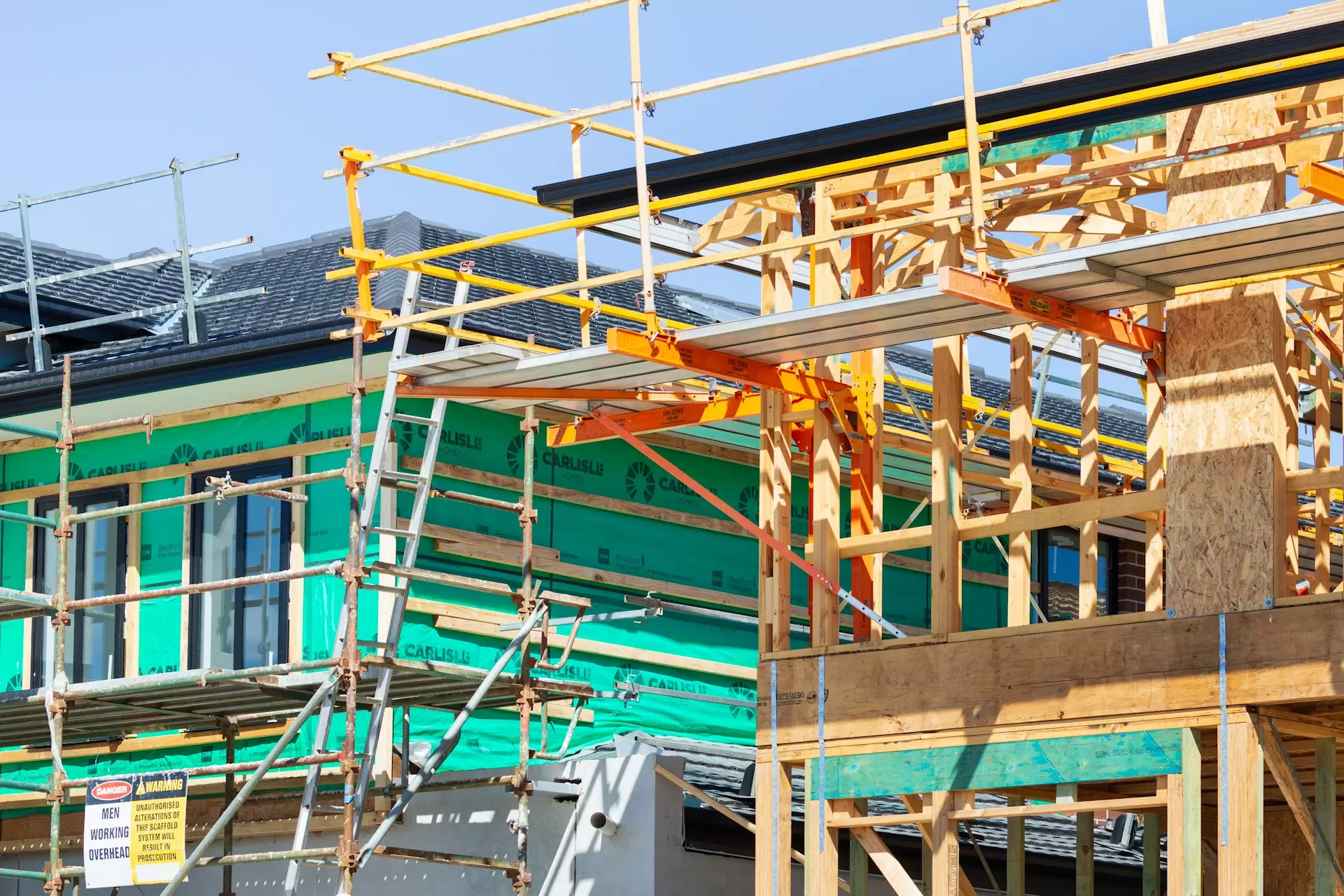
Construction finance works differently to a standard home loan because you draw funds in stages as the build progresses, not all at once.
The way you structure that drawdown determines how much interest you pay, when council approvals are needed, and whether your lender will release funds on time. Getting the structure wrong means frozen payments, unexpected costs, or holding two properties at once while your builder waits.
Fixed Price Building Contracts vs Cost Plus Arrangements
A fixed price building contract locks in the total cost before construction starts, while a cost-plus contract charges the actual cost of materials and labour plus a builder's margin.
Most lenders prefer fixed price contracts because the loan amount is known upfront. The builder provides a detailed quote, and the lender approves drawdowns based on that figure. Under a cost-plus contract, the final cost can shift, which means the lender may need to reassess your borrowing capacity partway through the build if expenses rise beyond the original estimate.
Consider a buyer in Merewether who locked in a fixed price contract at $680,000 for a new build on a subdivided block. The lender approved a construction to permanent loan with five progress payments tied to specific building stages. When material costs increased midway through, the builder absorbed the difference because the contract was fixed. The buyer's construction loan stayed within the approved amount, and settlement happened on schedule.
Progressive Drawing Fees and How They Add Up
Lenders charge a fee each time they release funds during construction, typically between $150 and $400 per drawdown.
Most construction loans include five to six progress payments, which means you could pay $750 to $2,400 in drawing fees alone. Some lenders cap these fees or bundle them into the loan amount, while others charge per inspection. You need to know the total fee structure before signing, not after the first payment is released.
If your builder requests variations or additional stages, each extra drawdown attracts another fee. In Newcastle's tighter blocks around Hamilton and The Junction, where site access can slow progress, builders sometimes split stages further to manage cash flow. That can push your drawing fees higher than expected.
Ready to get started?
Book a chat with a Finance & Mortgage Broker at Zaid Finance Co today.
Interest-Only Repayments During Construction
You only pay interest on the amount drawn down, not the full loan amount, until construction is complete.
During the build, most borrowers choose interest-only repayments because the loan balance grows with each progress payment. Once construction finishes and you move into principal and interest repayments, the full loan amount is assessed. If you're holding another property or renting while building, interest-only terms reduce your monthly commitment during construction.
Lenders calculate interest daily on the drawn balance. After the first progress payment of, say, $150,000 for site costs and slab, you pay interest on that amount only. After the second drawdown for framing, your balance might be $320,000, and interest adjusts accordingly. This structure keeps early costs lower but requires careful budgeting once the loan converts to principal and interest.
Land and Construction Packages vs Buying Land First
A land and construction package bundles the land purchase and build into one approval, while buying land first means you need to service that loan before construction finance is released.
If you buy land separately, you may be paying a mortgage on the block while waiting for council approval and builder availability. That can stretch your borrowing capacity and delay the build. A combined package treats the land and construction as a single transaction, so you don't start full repayments until the house is finished.
In areas like Adamstown and Charlestown, where suitable land is being released in small parcels, buyers sometimes secure a block first and apply for construction finance later. If council plans take longer than expected or the development application is delayed, you're servicing the land loan without progress on the build. A linked approval avoids that overlap.
Progress Payment Schedules and Council Approval Timing
Most construction loans require you to commence building within a set period from the disclosure date, usually six to twelve months.
If council approval drags out or your registered builder can't start on time, the lender may withdraw the construction approval or require a fresh assessment. Progress payment schedules are tied to specific stages like slab, frame, lockup, fixing, and completion. If your builder requests payment before the lender's progress inspection confirms that stage is finished, the funds won't be released.
Lenders send their own valuer or inspector to verify each stage before approving the next drawdown. If the plumbers or electricians are delayed and the stage isn't signed off, your builder may need to cover costs temporarily or pause work until the payment is released. That's common in Newcastle's regional market, where trades can be booked out weeks in advance.
Owner Builder Finance and Why It's Harder to Get
Owner builder finance is available if you're managing the construction yourself, but fewer lenders offer it and the interest rate is usually higher.
Lenders see owner builders as higher risk because there's no registered builder guaranteeing the work or holding insurance. You need to prove construction experience, provide detailed costings, and often accept a lower loan-to-value ratio. Most owner builders also need to pay sub-contractors upfront and claim reimbursements from the lender after each stage, which ties up more cash during the build.
If you're planning a custom design or spec home and want full control over trades, owner builder finance is an option, but expect tighter conditions and closer lender scrutiny at every stage.
Renovation Finance vs New Construction Loans
Renovation loans work similarly to new home construction finance but are often capped at a lower amount and treated as personal lending rather than construction lending.
If you're doing a major renovation that involves knocking down walls, adding a second storey, or extending the footprint, some lenders will treat it as construction finance and require council plans, progress inspections, and staged drawdowns. Smaller renovations might fall under a personal loan or home improvement loan, which releases funds in one lump sum rather than progressively.
The structure you choose depends on the scope of work and whether council approval is required. In Newcastle's older suburbs like Mayfield and Islington, where Queenslanders and brick cottages are being renovated and extended, the line between renovation and rebuild can be unclear. Your broker should clarify which structure applies before you commit to a builder.
If you're building in Newcastle and want to make sure your construction finance is structured to match your builder's schedule and your budget, call one of our team or book an appointment at a time that works for you.